BARLIN GAMES PLAY. CREATE. INSPIRE.

Ubisoft: The Story Behind One of Gaming's Biggest Worlds

From a family business in France to Rayman, Assassin's Creed, Far Cry and a worldwide network of game studios, discover how Ubisoft built one of gaming's biggest publishing and development empires.
Junaid Founder & Editor-in-Chief · 12 min read
Ubisoft: The Story Behind One of Gaming's Biggest Worlds
On This Page Explore this article
01 — At a glance

From a family business to a global gaming company

Ubisoft's story begins with a small French software business and grows into one of the most recognizable development and publishing organizations in modern gaming.

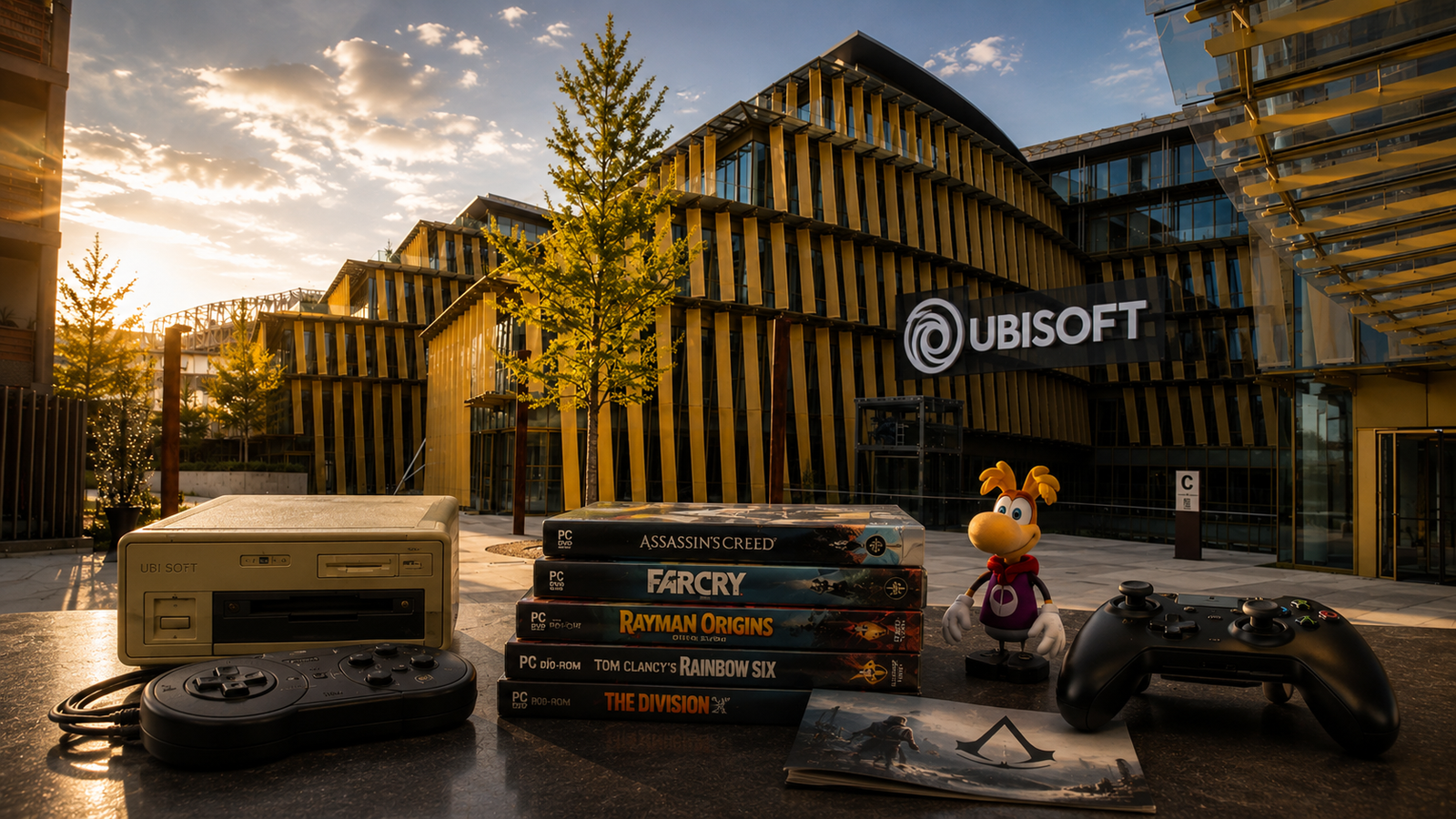
In 1986, five brothers from the Guillemot family entered the software business in France. What began as a relatively small family operation would eventually become one of the world's best-known video game publishers and developers.

Ubisoft's growth was not built around a single franchise. The company moved through publishing, original development, acquisitions, international expansion and increasingly ambitious game production.

Over the decades, Ubisoft became associated with franchises including Rayman, Prince of Persia, Tom Clancy's Rainbow Six, Splinter Cell, Far Cry, Assassin's Creed, Watch Dogs and Just Dance.

The company's history is especially interesting because Ubisoft repeatedly changed with the industry. It began by distributing software, moved deeper into game development, established studios around the world and eventually became one of the companies most strongly associated with large-scale open-world games.

1986Ubisoft is founded in France.
1995Rayman becomes an important international success.
2007Assassin's Creed launches and reshapes Ubisoft's identity.
02 — The beginning

How Ubisoft started

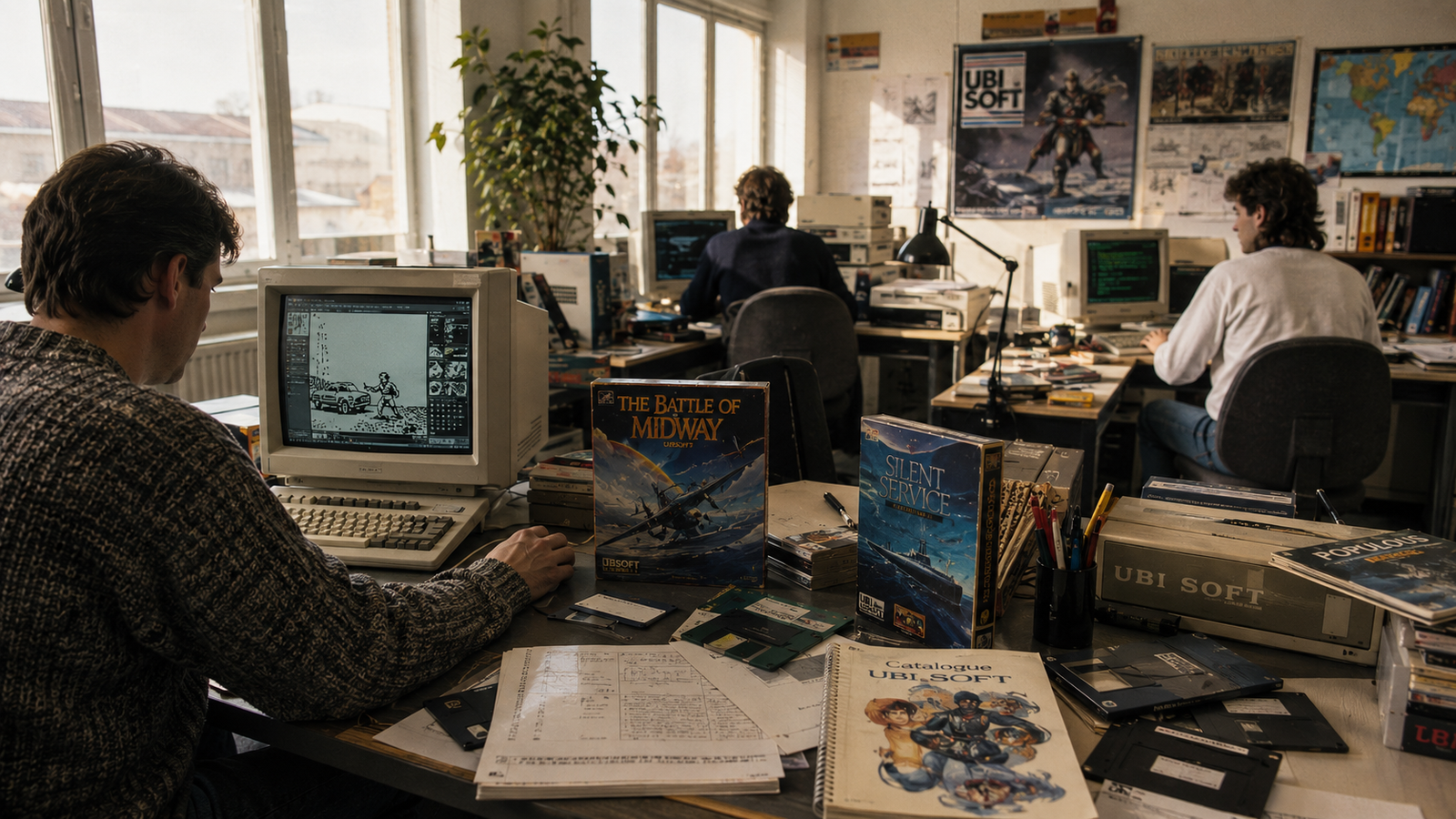
Ubisoft was founded in France in 1986 by the Guillemot brothers. The family entered the growing computer software market at a time when personal computers were becoming increasingly important to homes and businesses.

The early company was very different from the enormous development organization players know today. Ubisoft initially focused heavily on software distribution and publishing, giving the founders an opportunity to understand how computer software moved between creators, retailers and customers.

This publishing background became one of Ubisoft's early advantages. The company learned how to identify software with commercial potential and how to bring products to audiences outside its original market.

As the business expanded, Ubisoft gradually moved further into game development itself. That transition would eventually allow the company to create its own franchises rather than depending entirely on products developed by other studios.

The foundation of Ubisoft

The company's early experience was not simply about selling software. It gave Ubisoft an understanding of the business surrounding games, knowledge that would later help it build a much larger international publishing and development operation.

03 — Early publishing years

The years that built Ubisoft's publishing business

Before Ubisoft became known primarily for its own franchises, publishing played a major role in the company's expansion.

During the late 1980s and early 1990s, the video game industry was changing rapidly. Personal computers were becoming more capable, consoles were becoming increasingly important and publishers were looking for games that could reach audiences beyond their home countries.

Ubisoft expanded its publishing activity during this period and developed relationships with developers and creators across different markets.

This international approach became an important part of the company's identity. Ubisoft increasingly looked beyond France for games, talent and business opportunities.

Publishing also taught the company how different audiences responded to different genres. That experience would become increasingly valuable as Ubisoft began investing more heavily in original development.

04 — Rayman

Rayman puts Ubisoft on the map

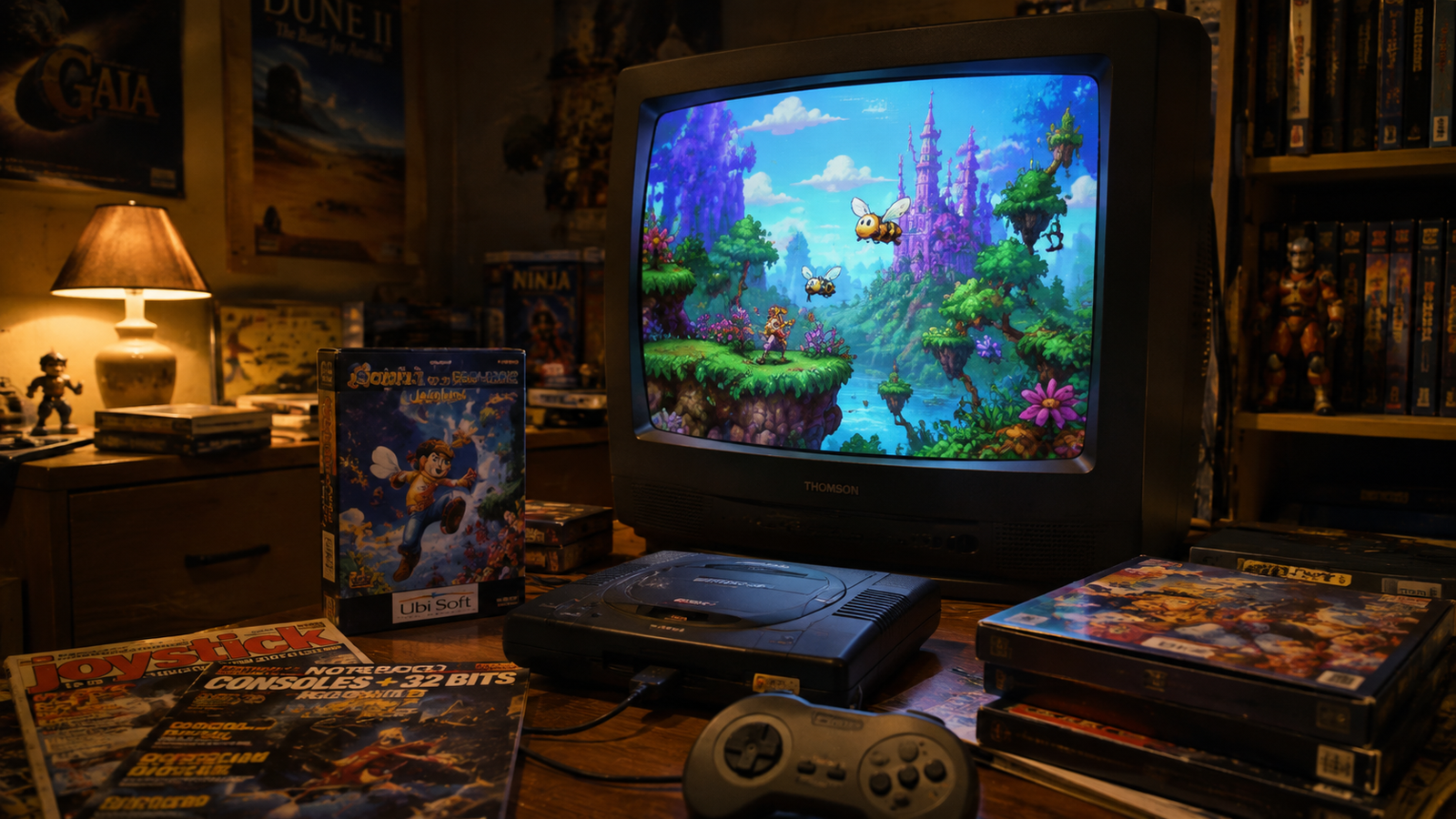
One of Ubisoft's first major original successes came with Rayman.

Released in the 1990s, Rayman introduced players to a distinctive platforming world filled with colorful environments, unusual characters and expressive animation.

The game helped demonstrate that Ubisoft could do more than publish software created by other companies. It could build original characters and worlds that belonged to Ubisoft itself.

Rayman's success gave the company an important creative identity. The franchise also showed that Ubisoft could compete internationally with publishers that had already established themselves through recognizable characters and successful game series.

Rayman would remain an important part of Ubisoft's history even as the company's portfolio later moved toward larger action games and open worlds.

05 — Global expansion

Building a global studio network

As Ubisoft grew, the company increasingly invested in development teams outside its original French base.

Studios across Europe, North America and other regions became important parts of Ubisoft's development structure. This allowed the company to access new talent and work on projects that were becoming far more ambitious than the games of its early years.

Canada became particularly important to Ubisoft's development strategy. Ubisoft Montreal eventually became one of the company's most significant creative centers and played a major role in the development of several major franchises.

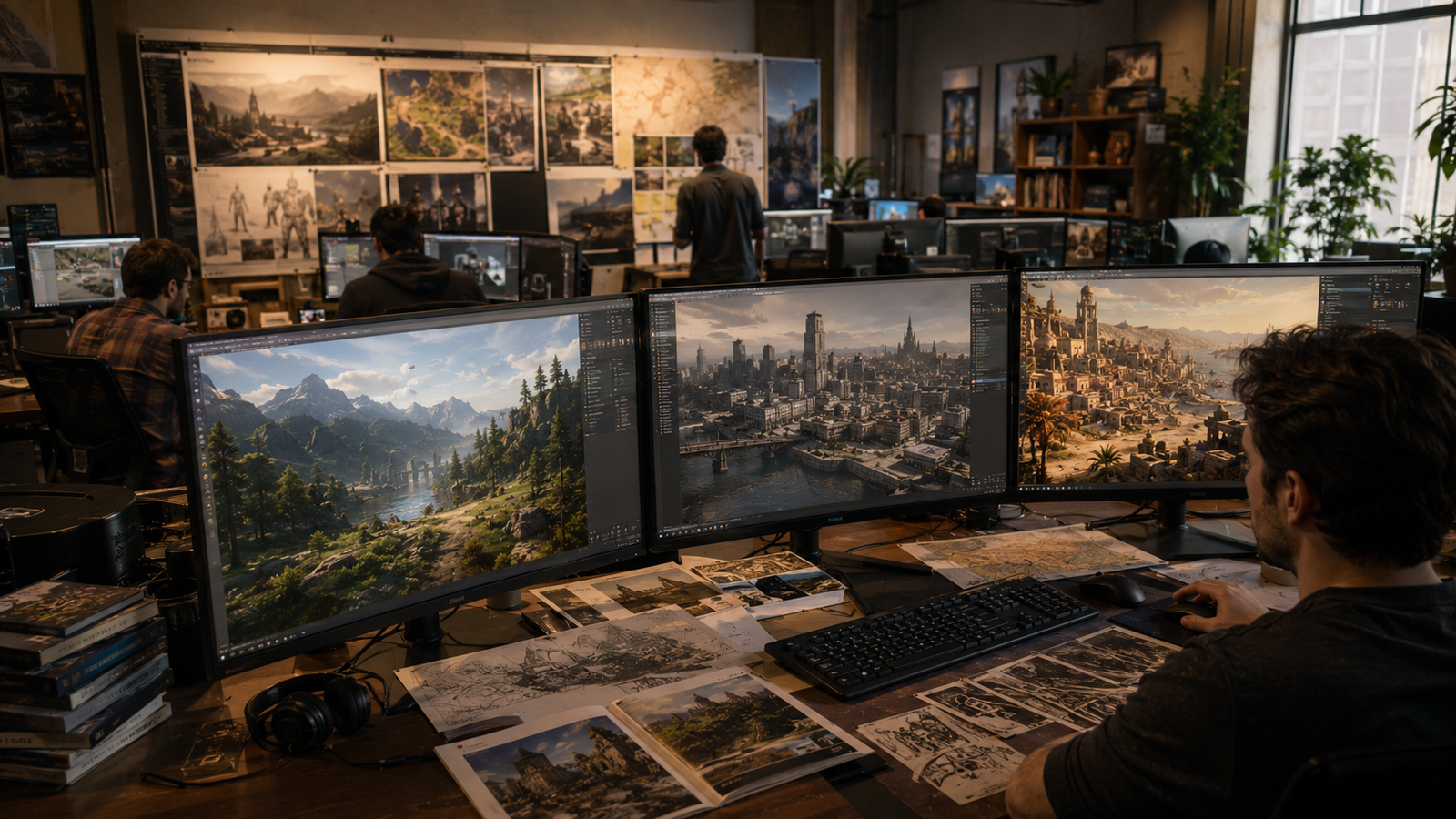
The international structure allowed different teams to contribute specialized skills to large productions. Animation, technology, world building, gameplay, cinematics and online systems could be developed across multiple locations.

This global network would become one of Ubisoft's biggest strengths, but it also introduced a new challenge: coordinating increasingly large teams and keeping major projects aligned.

A different way to build games

Ubisoft's international studio model allowed the company to grow beyond what a single development location could realistically support.

06 — Tom Clancy

The Tom Clancy era

Ubisoft's Tom Clancy games helped establish the company as a major force in tactical action and military shooters.

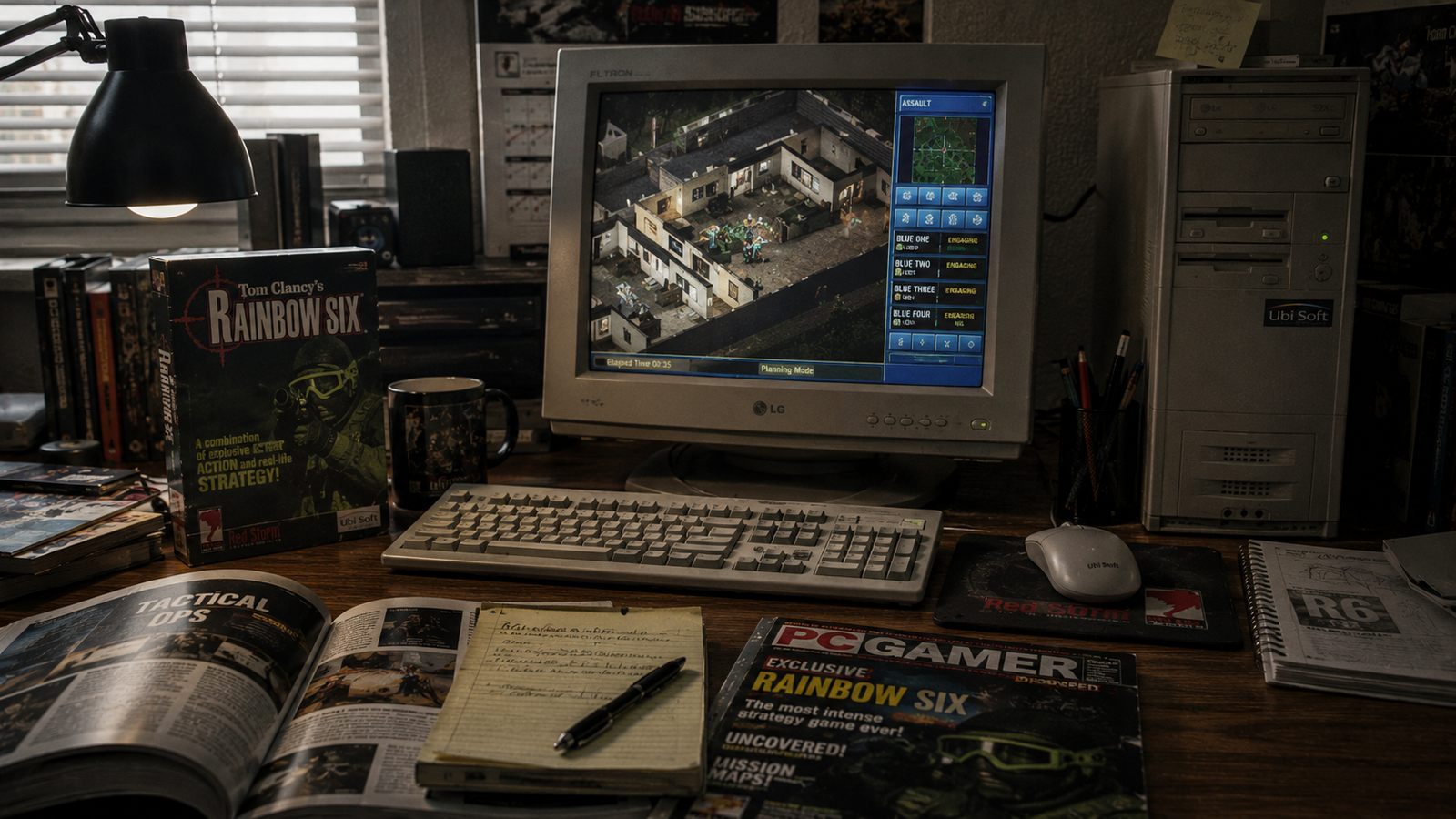
Rainbow Six became one of Ubisoft's most important tactical franchises. Its focus on planning, teamwork and careful decision-making gave players an experience very different from traditional arcade-style shooters.

Ubisoft expanded the Tom Clancy portfolio with franchises including Splinter Cell and Ghost Recon, giving the company a strong presence in stealth, tactical action and military-themed games.

These franchises also helped Ubisoft develop expertise in multiplayer systems, character animation, level design and large-scale production.

Rainbow Six

A tactical series built around teamwork, planning and competitive multiplayer.

Splinter Cell

A stealth-focused series that helped establish Ubisoft's reputation for cinematic tactical gameplay.

Ghost Recon

A military-focused series built around tactical combat, cooperation and large environments.

07 — Prince of Persia

Prince of Persia returns

Ubisoft's work on Prince of Persia provided another major step in the company's development history.

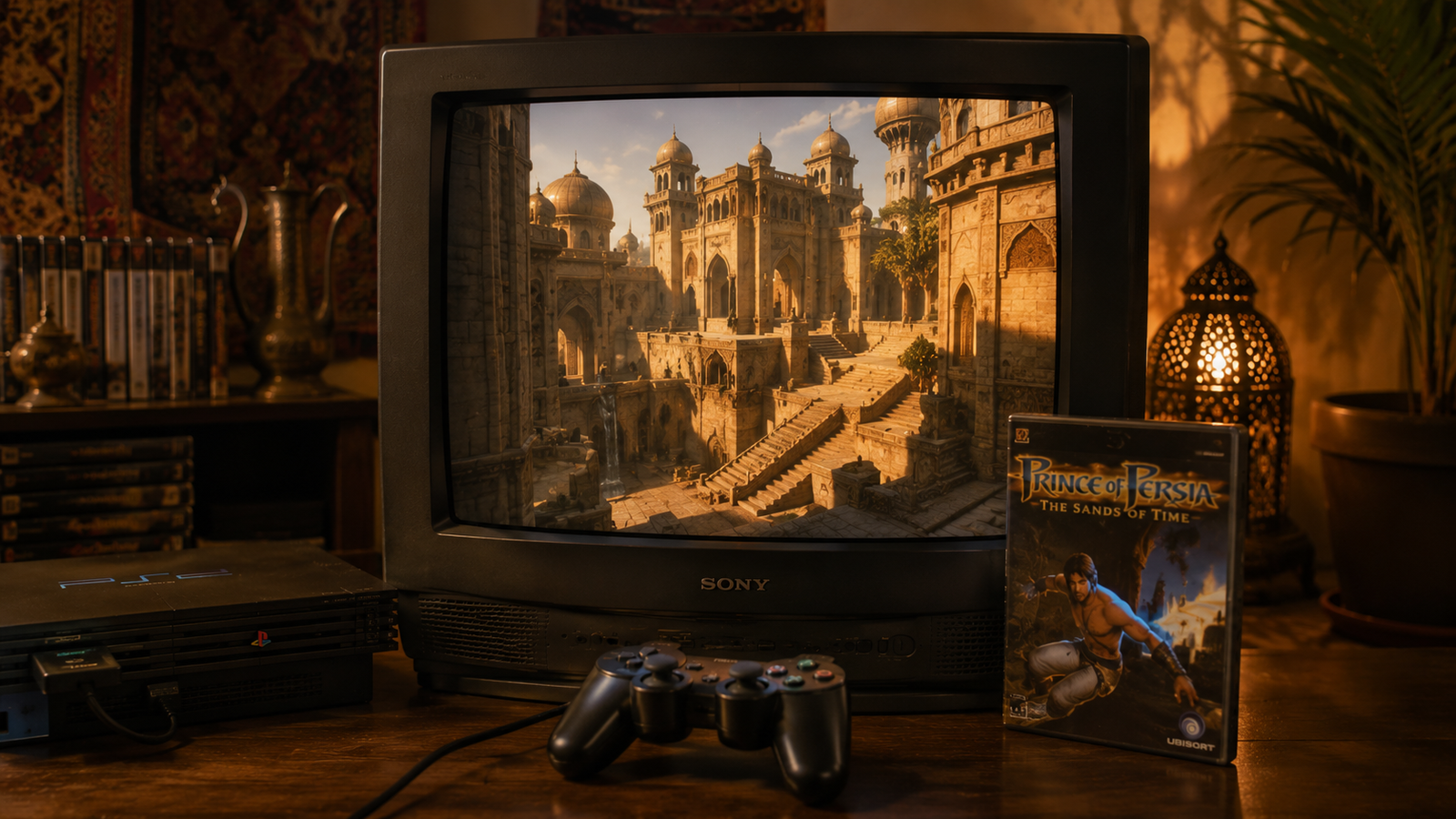
Prince of Persia: The Sands of Time, released in 2003, reimagined the classic franchise with cinematic presentation, acrobatic platforming and a distinctive time-manipulation mechanic.

The game combined exploration, combat and environmental puzzles into an adventure that felt very different from many other action games of its era.

The Sands of Time became an important critical and commercial success and demonstrated Ubisoft's growing ability to take established concepts and rebuild them for modern audiences.

The game's emphasis on movement, exploration and cinematic presentation would also influence the company's approach to future action-adventure projects.

08 — Assassin's Creed

Assassin's Creed changes everything

In 2007, Ubisoft introduced the franchise that would become one of the defining properties in the company's history.

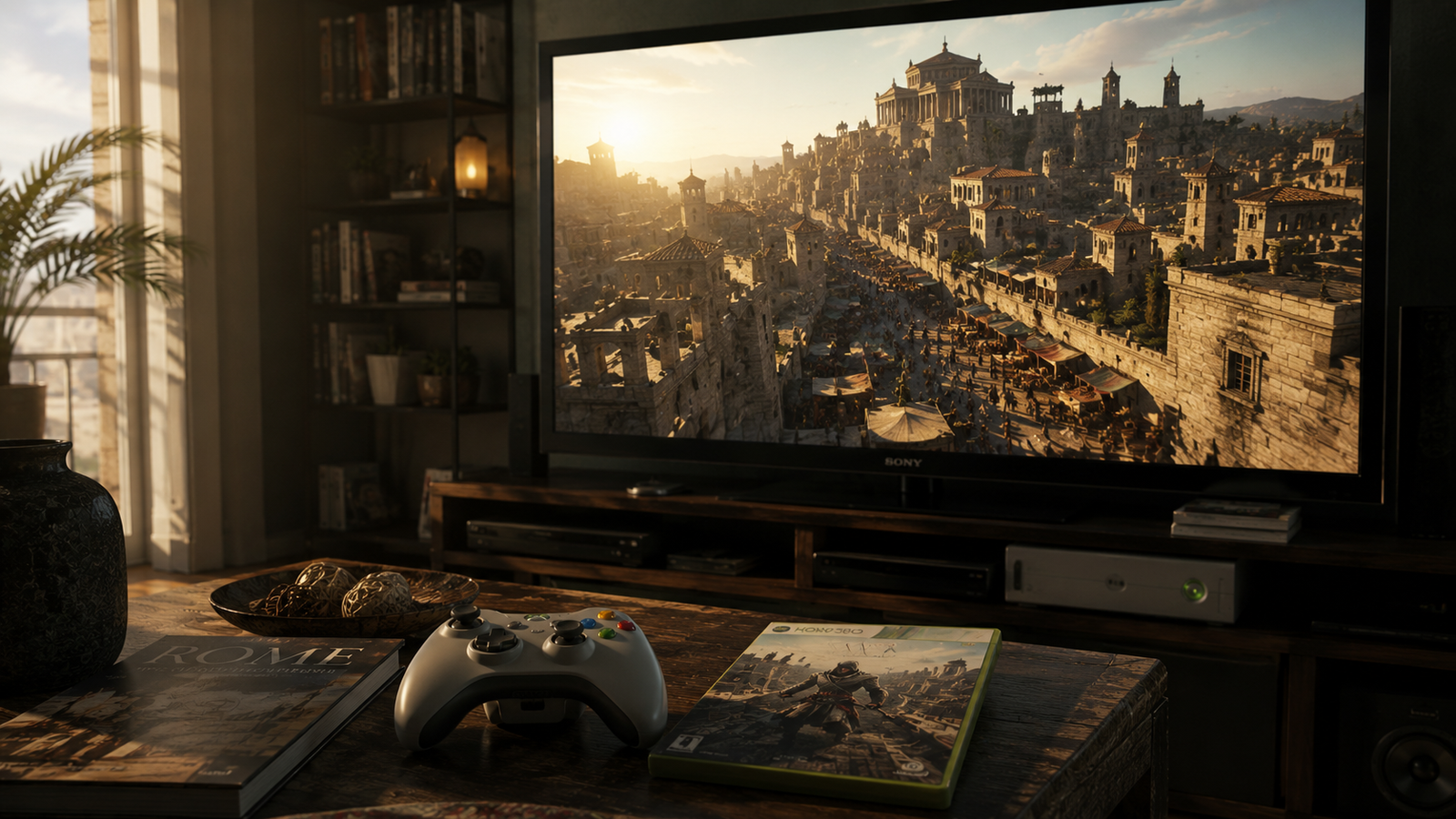
Assassin's Creed combined historical settings, exploration, stealth, combat and parkour into a new type of large-scale action-adventure experience.

The original game established the central concept that historical environments could become enormous interactive playgrounds.

Later entries expanded the idea dramatically. Cities became larger, environments became more detailed and the series incorporated role-playing systems, naval exploration, character progression and increasingly complex world activities.

Assassin's Creed eventually became much more than a successful franchise. It became one of the clearest representations of Ubisoft's development philosophy.

Historical worlds became playgrounds for exploration, movement and discovery.

Barlin Games — Editorial perspective

Large worlds, recognizable settings, exploration and extensive amounts of content became increasingly associated with the Ubisoft name.

09 — Far Cry

Building Ubisoft's open-world formula

While Assassin's Creed was becoming one of Ubisoft's biggest franchises, Far Cry developed into another major pillar of the company's portfolio.

Far Cry offered Ubisoft a different type of open-world playground. Instead of historical cities, the series could place players in tropical environments, mountains and fictional locations filled with wildlife, enemies, vehicles and unpredictable encounters.

The series became known for giving players freedom in how they approached situations. Exploration, weapons, vehicles and environmental systems combined to create worlds that encouraged experimentation.

This philosophy became increasingly important to Ubisoft. Large maps were not simply about making games bigger. They were about giving players more opportunities to explore, experiment and create their own experiences.

10 — Just Dance

A completely different kind of hit

Ubisoft's identity has never been limited to realistic action games. Just Dance became one of the clearest examples of the company's willingness to build a franchise around a completely different audience.

The series turned movement and music into the central gameplay experience. Players could follow choreography, compete with friends and enjoy the game as a social activity.

Its accessibility helped Just Dance reach people who might never consider themselves traditional video game players.

The franchise demonstrated that Ubisoft did not always need enormous worlds and complex combat systems to create successful games.

Sometimes the strongest concept was simply a game that made people want to play together.

11 — Connected worlds

Watch Dogs and The Division

During the 2010s, Ubisoft continued experimenting with connected open worlds through franchises such as Watch Dogs and Tom Clancy's The Division.

Watch Dogs explored the relationship between technology, surveillance and modern cities. Its central idea was that connected infrastructure could become part of the player's toolkit.

The Division approached the open-world formula differently. It combined a detailed urban environment with cooperative multiplayer, character progression, equipment systems and persistent online gameplay.

These projects showed Ubisoft moving toward games that were not only large but designed to keep players engaged for much longer periods.

12 — The studio network

How Ubisoft built games around the world

One of Ubisoft's most unusual characteristics is the scale of its international development organization.

Rather than concentrating all creative talent in a single location, Ubisoft developed studios across Europe, North America and other regions.

This allowed teams to specialize in different parts of game production. Animation, technology, sound, cinematics, world building, gameplay systems and quality assurance could all involve teams working across different locations.

The approach became increasingly valuable as AAA development became more complicated and expensive.

But the same structure also created challenges. Coordinating enormous teams across multiple countries requires strong communication, production management and creative direction.

13 — Live service

The live-service era

The video game business changed dramatically during the 2010s and 2020s. Players increasingly expected games to receive updates, new content and online features long after launch.

Ubisoft responded by investing in games designed to have longer lifespans.

Rainbow Six Siege became one of the clearest examples of this approach. Rather than being treated purely as a traditional one-time release, the game evolved through seasons, operators, balancing updates and new content.

The strategy offered a major potential advantage. A successful long-running game could maintain an active community and generate revenue over a much longer period than a traditional release.

14 — The challenge

When the formula started showing cracks

Ubisoft's success eventually created one of its biggest challenges. The company's games became increasingly large, expensive and time-consuming to produce.

Large open worlds require enormous amounts of content. Environments need art, animation, sound, missions, characters, systems and testing.

When several projects followed similar structures, the development process could become difficult to manage.

The company also faced a changing audience. Players became more selective about how they spent their time, while competition from other publishers and independent developers continued to grow.

The real challenge

Ubisoft's problem was not simply making games bigger. It was making enormous games feel distinctive enough to justify the time and attention they demanded.

15 — Reinvention

Where Ubisoft goes next

Ubisoft's future depends on balancing its enormous portfolio with a changing video game industry.

The company still has some of the industry's most recognizable franchises, including Assassin's Creed, Far Cry, Rainbow Six and Just Dance.

Each franchise serves a different audience and represents a different part of Ubisoft's development expertise.

At the same time, the company has to manage the enormous cost and complexity of modern AAA development.

That creates an opportunity for Ubisoft to become more selective. Not every project needs to become larger. Each franchise can instead focus on the qualities that make it different.

The strongest future for Ubisoft may therefore come from variety rather than making every game follow exactly the same formula.

16 — Ubisoft today

A global company in a changing industry

Today, Ubisoft is far removed from the small French software business created by the Guillemot family in 1986.

The company has developed into a major international publisher and developer with studios and teams spread across multiple countries.

Its portfolio covers an unusually broad range of genres. Historical action-adventure, tactical shooters, open-world exploration, music games and online multiplayer all exist within the same corporate ecosystem.

That diversity is one of Ubisoft's biggest strengths.

Few companies have accumulated such a recognizable collection of franchises while also building a development network capable of producing games at enormous scale.

17 — Final thought

Why Ubisoft still matters

Ubisoft's story is not simply the story of Assassin's Creed, Far Cry or Rayman. It is the story of how a small family business learned to operate at almost every level of the modern video game industry.

The company published games, created original franchises, acquired studios, built development teams across continents and experimented with genres ranging from platformers to tactical shooters and massive open worlds.

Some of those experiments became defining successes. Others revealed the risks of building games at enormous scale.

The bigger picture

Ubisoft's history is ultimately a story about adaptation: from software distribution to original games, from local development to a worldwide studio network, and from individual releases to enormous connected worlds.

From a handful of brothers building a software business in France to a global network of developers creating worlds played by millions, Ubisoft became one of gaming's most recognizable companies.

18 — FAQ

Frequently Asked Questions About Ubisoft

From its beginnings as a small French family business to the global publisher behind Assassin's Creed, Far Cry, Rayman and Rainbow Six, here are answers to the most common questions about Ubisoft's history, games and evolution.

When was Ubisoft founded?

Ubisoft was founded in 1986 by the five Guillemot brothers as a company focused on publishing and distributing educational software and video games.

Who founded Ubisoft?

Ubisoft was founded by five brothers from the Guillemot family: Claude, Michel, Yves, Gérard and Christian Guillemot.

What was Ubisoft's first major hit?

Rayman, released in 1995, became Ubisoft's first major hit and went on to become one of the company's most recognizable franchises.

When did Assassin's Creed begin?

The Assassin's Creed franchise began in 2007 and grew into one of Ubisoft's defining series, combining historical settings with action-adventure, stealth and role-playing elements.

What games is Ubisoft known for?

Ubisoft is known for franchises including Assassin's Creed, Far Cry, Rainbow Six, Rayman, Just Dance, Prince of Persia, Watch Dogs, The Division, The Crew and Anno.

Where is Ubisoft based?

Ubisoft is headquartered in France and operates a large international network of studios and offices across Europe, North America, Asia and other regions.

Does Ubisoft develop games in India?

Yes. Ubisoft operates studios in India, including Ubisoft Pune. The company says its Indian teams contribute to production, quality control, technology and co-development work across Ubisoft projects.

Why is Ubisoft known for open-world games?

Ubisoft developed a strong reputation for large explorable worlds through franchises such as Assassin's Creed, Far Cry, Watch Dogs and The Division. Its development teams have repeatedly experimented with systemic worlds, exploration and player-driven activities.

How many people work at Ubisoft?

Ubisoft currently says it has more than 17,000 employees working across more than 50 locations worldwide.

Is Ubisoft still independent?

Ubisoft says it remains committed to its independence as a game maker and publisher, with the company describing creative independence as an important part of its strategy.

Junaid
About the author

Junaid

Founder & Editor-in-Chief at Barlin Games

Founder and Editor-in-Chief of Barlin Games, covering games, studios, developers, gaming culture, and the stories behind the industry.

6 Articles Published
1+ Readers
Love this article? Building a better way to discover games. View all articles