
BARLIN GAMES
Feature

AI NPCs in Video Games: Will Characters Ever Think and Talk Like Real People?

AI-powered NPCs could make conversations, companions and game worlds feel more responsive. Discover how the technology works, what developers are testing, and why believable characters are harder to build than they seem

Junaid Founder & Editor-in-Chief · 11 min read
AI NPCs in Video Games: Will Characters Ever Think and Talk Like Real People?
01

Why Do NPCs in Most Games Feel So Predictable?

Sometimes, the most memorable characters in a video game are the ones that make its world feel alive. But what happens when you try talking to them and discover that they can only repeat a few familiar lines?

Traditional non-player characters, or NPCs, usually operate through dialogue trees, scripted events, and predefined behaviours. When you approach a shopkeeper, guard, or villager, the game selects a response from dialogue written or arranged by the developers.

This gives writers precise control over the story, personality, and information each character shares. It also makes conversations easier to test and ensures that important dialogue happens at the right moment.

The limitations become obvious when you ask an unexpected question or try to discuss something outside the available dialogue options. The character might repeat a greeting, ignore your question, or respond as though an earlier conversation never happened.

That doesn't mean traditional NPCs are poorly designed. A carefully written character can be unforgettable, and a single well-timed line can communicate more emotion than an endless conversation. The challenge is that the character's possible responses are limited by what the game has been designed to support.

AI-powered NPCs explore another possibility: characters that can respond to a wider range of player input instead of relying entirely on fixed dialogue options.

A character doesn't need endless dialogue to feel believable. It needs responses that make sense for its personality and the situation.

02

How Can AI Make NPC Conversations Feel More Natural?

Imagine asking a village blacksmith why the town is so quiet and receiving an answer shaped by what is happening in the game world, rather than selecting one line from a short menu.

AI-powered conversations can use large language models to interpret player input and generate dialogue. Depending on the implementation, a player might type a question, speak through a microphone, or combine open-ended conversation with traditional dialogue options.

A speech-based system may combine several technologies. Speech recognition converts spoken words into text, a language model processes the input and produces a response, and text-to-speech technology can turn that response into audio. The game then presents the result as part of the character's interaction.

However, generating a natural-sounding sentence is only one part of the challenge. The character also needs to stay consistent with its personality, understand the relevant context, and avoid inventing information that contradicts the game's story.

Developers can guide responses using character descriptions, approved world information, instructions, and restrictions on what an NPC is allowed to discuss. These controls help turn a general-purpose language model into a character that belongs in a particular fictional world.

When these systems work well, conversations can feel less restricted without requiring developers to manually write every possible sentence. The result still depends on the model and the systems connecting it to the game.

A blacksmith in a fantasy game workshop, illustrating conversational interactions with an NPC.
03

Can AI NPCs Remember Your Previous Conversations?

A conversation can feel much more personal when a character remembers something that happened earlier. Imagine helping a merchant during one mission and returning later to find that the merchant remembers what you did.

For an NPC to remember previous interactions, the game needs more than a language model generating dialogue. It needs a way to record relevant events, retrieve that information later, and decide when it should influence a response.

A game might store details such as completed quests, important decisions, relationships, or selected parts of earlier conversations. When the player returns, the character can receive relevant information and use it to shape the next interaction.

This memory doesn't have to include every word the player has ever said. Remembering a few meaningful events may be more useful than retaining an enormous conversation history. Developers also need to decide how long information remains relevant and what happens when the player changes the story through a new decision.

There are risks, too. An NPC might refer to an event that never happened, confuse two characters, or reveal information it should not know. Incorrect memory can break immersion more quickly than a character that simply admits it doesn't remember.

Persistent memory is therefore both a technical and a storytelling challenge. When implemented carefully, it can make a character feel connected to the player's journey. When implemented poorly, it can make the world feel inconsistent.

“

A memorable NPC doesn't need to remember everything. It needs to remember the things that matter.

04

Are Game Studios Already Experimenting With AI NPCs?

The idea of conversational characters is no longer limited to science fiction. Technology companies and game developers have already demonstrated prototypes designed to make character interactions more flexible.

NVIDIA's Avatar Cloud Engine, known as ACE, explores technologies for AI-powered characters, including conversational interactions and supporting AI components. The goal is to give developers tools for creating characters that can respond more dynamically than traditional scripted dialogue alone.

Ubisoft has also presented experimental work involving generative AI characters. Its NEO NPC research explored interactions in which character conversations could respond to player input while being shaped by character context and the fictional setting.

These demonstrations illustrate how language models and other AI technologies can be connected to game characters. They also reveal the amount of design work needed to make a conversation feel appropriate rather than simply producing a plausible sentence.

It is important to distinguish prototypes from fully released games. A technology demonstration can show that a particular interaction is possible without proving that the same system is ready to operate reliably across an entire commercial game.

AI NPC technology is developing, but developers still need to consider performance, response delays, operating costs, character consistency, and how the system fits into the experience they want to create.
01

NVIDIA ACE

AI technologies and development tools exploring more dynamic interactions with virtual characters.

02

Ubisoft NEO NPC

An experimental project exploring conversational characters shaped by player input and character context.

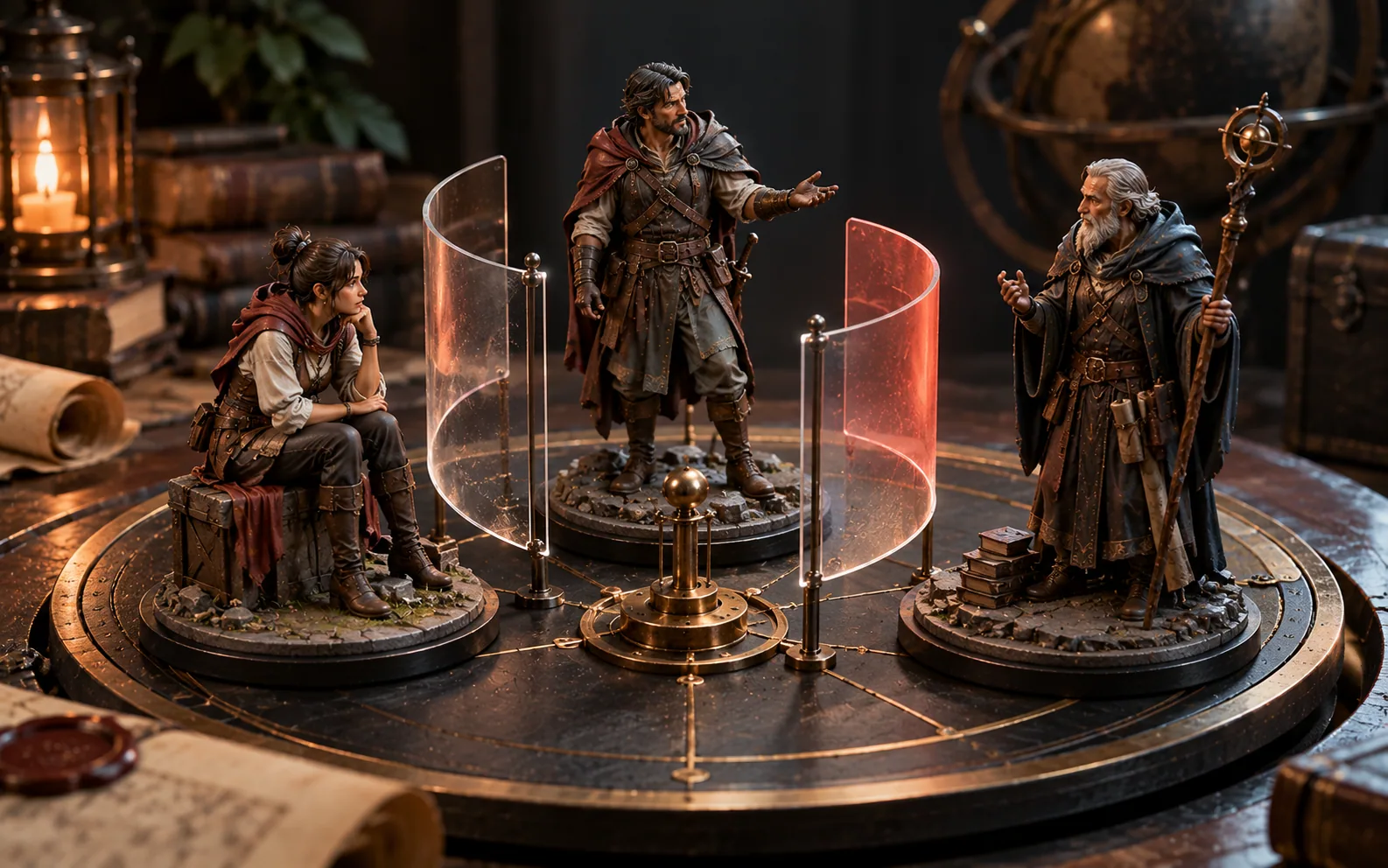
Three stylised character figures representing experiments with AI-powered NPC interactions.
Inside an AI Character Experiment
05

What Happens When an AI NPC Says Something Wrong?

An NPC might sound convincing for several sentences and then suddenly say something that makes no sense in the game world. That is one of the biggest challenges facing AI-generated dialogue.

Language models can generate responses that sound confident while containing incorrect or invented information. In a game, this could mean a merchant describing an imaginary location, a companion contradicting an earlier event, or a quest character providing instructions that do not match the actual mission.

Developers can reduce these problems by giving the system access to verified game information, defining what a character knows, and restricting responses when accuracy is essential. Important story events can still rely on carefully authored dialogue, while AI-generated responses handle less critical conversations.

Timing matters as well. Players expect dialogue to feel responsive. If every question triggers a long wait while the game generates a response, the interaction can become frustrating. Remote services may introduce network delays, while running models locally can require additional processing resources.

There is also a question of creative control. Writers and designers need ways to preserve a character's personality, protect important story reveals, and prevent dialogue from undermining the intended tone.

The challenge is not simply making an NPC talk. It is making sure the character says something appropriate, consistent, and useful within the game.

  • World knowledge: Keep responses grounded in information that is true in the game.
  • Character identity: Maintain a consistent personality, role, and tone.
  • Story boundaries: Prevent premature reveals or contradictory quest instructions.
  • Response time: Keep conversations responsive enough to feel natural.
  • Player safety: Apply suitable safeguards to open-ended interactions.

Natural-sounding dialogue is not enough. It must also fit the character, the moment, and the world.

06

Will Every Conversation in a Game Be Different?

One of the most exciting possibilities of AI NPCs is that two players might have different conversations with the same character, even when they begin with the same question.

AI-generated dialogue can create variations in wording, explanations, and conversational flow. A player might ask about a character's work, return to discuss a recent event, or approach a topic in an unexpected way. Depending on the system, the NPC may respond differently based on the information supplied to it.

But variation alone doesn't make a conversation meaningful. Players still need useful answers, consistent personalities, and interactions that support the game's purpose. An NPC that produces endless irrelevant dialogue is not necessarily more interesting than one with a handful of excellent lines.

A hybrid approach may offer a better balance. Developers can use authored dialogue for important story scenes, quest instructions, and emotional moments, while AI handles selected open-ended conversations. This gives players more freedom without making every part of the narrative unpredictable.

Different games will also have different needs. A role-playing game may benefit from extended character conversations, while a fast-paced action game might use AI for a few contextual reactions rather than lengthy discussions.

The aim isn't to make every conversation unique simply for the sake of novelty. It is to give players more meaningful ways to interact with the world.

Authored dialogue
Written and reviewed by the development team. Offers precise control over wording, timing, and story details. Works espe
AI-generated dialogue
Can respond to a wider range of player input. May create more variation in open-ended conversations. Requires controls t
07

Could AI NPCs Change the Way Games Tell Stories?

Traditional game stories often guide players through carefully written scenes and predetermined dialogue choices. AI NPCs could create additional opportunities for players to explore a fictional world through their own questions and conversations.

Imagine a detective game where you can question a witness using your own words, or a role-playing game where a companion can discuss events beyond a short list of prepared responses. In a simulation game, a shopkeeper might respond to the player's actions in more varied ways. These interactions could make the world feel more responsive.

However, storytelling involves much more than conversation. Writers carefully control pacing, character development, dramatic tension, and when the player learns important information. An unrestricted conversational system could accidentally reveal a secret too early or weaken the impact of a carefully constructed scene.

Developers will need to decide where open-ended dialogue improves the experience and where fixed, authored scenes remain the better choice. AI may also create opportunities for optional conversations that deepen a character without changing the central storyline.

Used thoughtfully, AI NPCs could give players new ways to participate in stories. They won't automatically make every story better, but they may expand the kinds of interactions developers can create.

The player starts a conversation

The player asks a question using text, voice, or a dialogue option.

The game supplies context

The system receives relevant character information, world facts, and events the NPC is allowed to know.

The response is generated or selected

The game uses an appropriate authored line or generates a response within the system's restrictions.

The NPC responds in the world

The dialogue is presented through text, voice, animation, or a combination of these elements.

The game updates relevant state

If the interaction is designed to affect memory, relationships, or a quest, the game records the appropriate result.

An open storybook with branching miniature scenes representing different possibilities for interactive game storytelling.
Stories With More Than One Path
08

Will AI Eventually Replace Traditional NPCs?

AI NPCs could make character interactions more flexible, but that doesn't mean every traditional NPC will disappear. Scripted characters still offer important advantages in consistency, performance, and storytelling control.

Traditional dialogue remains useful when a game needs precise timing, carefully written emotional scenes, or reliable information about quests and world events. AI-generated dialogue may be more valuable when players benefit from open-ended conversations or contextual responses that would otherwise require developers to write many variations manually.

There are also wider considerations. Generated dialogue needs moderation and quality controls. Voice generation raises questions about performers' consent, rights, and compensation. Developers must also consider accessibility, language support, data handling, and the costs of running AI systems.

The technology may affect how writers and designers work. AI tools could help teams prototype interactions, explore alternative dialogue, or build supporting conversations while leaving creative direction with the development team.

The future may involve different approaches serving different purposes. Some characters may remain entirely scripted, while others use AI for specific conversations or behaviours.

Ultimately, the success of AI NPCs will depend less on how much they can say and more on whether their interactions make the game more engaging, coherent, and memorable.

Mostly authored in advance
Can generate responses to player input
Highly predictable
Requires safeguards and careful context
Limited by available dialogue
Potentially broader and more flexible
Usually implemented through specific game flags or scripts
May use additional systems to retrieve relevant interaction history
Writing, scripting, testing, and localisation
Those same needs, plus model integration, evaluation, and safeguards
Carefully timed story scenes and reliable instructions
Selected open-ended or context-sensitive interactions

A character doesn't become memorable simply because it can talk endlessly. It becomes memorable when its words, actions, and relationship with the player give u

AI NPCs offer the possibility of characters that respond more naturally, remember meaningful events, and give players greater freedom to interact with fictional worlds. But believable characters require more than fluent dialogue: they need consistent personalities, reliable information, and a clear place within the story.

The future of NPCs may not be a choice between scripted characters and artificial intelligence. It may be a combination of both, with developers using each approach where it creates the strongest experience.

09 — FAQ

Frequently Asked Questions About AI NPCs in Video Games

AI-powered NPCs could change how players interact with game characters, but the technology still has limitations. These answers explain how AI NPCs work, where developers are experimenting with them, and what players can realistically expect.

What are AI NPCs in video games?

AI NPCs are non-player characters that use artificial intelligence to control aspects of their behaviour or interactions. Traditional NPCs may rely on scripted dialogue and predefined rules, while generative AI NPCs can produce more flexible responses based on supplied context and instructions.

How do AI NPCs work?

Depending on the implementation, an AI NPC may use a character definition, conversation context, game-world information, a language model and controlled gameplay functions. These components help the character generate responses while remaining within the game's rules.

Are AI NPCs already being used in real games?

Developers and technology companies have demonstrated AI-character projects and experimental tools. NVIDIA has described ACE-powered character applications, Ubisoft has presented its NEO NPC prototype, and Epic Games has announced experimental AI conversations for Fortnite creators. Availability and capabilities differ by project.

Can AI NPCs remember what players do?

Some systems can use information from earlier in a conversation or a game session. Remembering events reliably across longer periods is more difficult and depends on how the developer implements memory, stores relevant information and connects it to the game world.

Will AI NPCs make every conversation unique?

Not necessarily. Generative systems can produce different responses, but those responses may still be repetitive, incorrect or inconsistent. Developers need context, character rules and testing to make conversations useful and believable.

Will AI NPCs replace game writers and voice actors?

There is not enough evidence to conclude that AI NPCs will replace these professions across the industry. AI may support some workflows, but character development, performance, narrative direction and creative oversight remain important parts of game production.

What are the biggest problems with AI NPCs?

Major challenges include response delays, incorrect information, inconsistent personalities, safety and moderation, computing costs, and ensuring that characters behave consistently with the game's rules and story.

Will future open-world games have fully intelligent AI characters?

Future games may offer more flexible and context-aware characters, but fully human-like intelligence is not an established capability. Progress will depend on technical reliability, creative design, performance and whether the systems improve the player's experience.

Junaid
About the author

Junaid

Founder & Editor-in-Chief at Barlin Games

Founder and Editor-in-Chief of Barlin Games, covering games, studios, developers, gaming culture, and the stories behind the industry.

15 Articles Published
Love this article? Building a better way to discover games. View all articles