BARLIN GAMES
Feature

How AI Is Changing Voice Acting in Video Games

AI is changing how video game characters speak, from generated dialogue and synthetic voices to voice cloning and localisation. Discover how the technology works, what it could mean for game developers and voice actors, and why consent, creative control and human performance still matter.
Junaid Founder & Editor-in-Chief · 12 min read
How AI Is Changing Voice Acting in Video Games
On This Page Explore this article
01

When a Character's Voice Can Change

A familiar voice can make a game character memorable. AI is beginning to change how some characters speak, how their dialogue is produced, and how developers imagine conversations working inside a game.

Think about a character whose voice you recognise immediately. It might be a companion who stays beside you through a difficult mission, a villain whose delivery makes every scene tense, or a shopkeeper whose short greeting becomes familiar after dozens of visits.

Traditionally, game dialogue is written, performed, recorded, edited, and integrated into the game. Developers plan lines around a character's personality, the story, and the player's possible actions. Even a short sentence can require careful direction to make it sound convincing.

AI introduces additional ways to create and deliver speech. Depending on the system, it may generate speech from text, adapt an existing voice, help produce language variations, or support dialogue that responds to a player's own words.

But these technologies are not interchangeable. Generating a new synthetic voice is different from cloning an identifiable actor's voice, and both are different from using AI to generate a character's dialogue.

The important question is not simply whether a computer can make a character talk. It is whether the result serves the game, preserves the character's identity, and respects the people whose performances help bring fictional worlds to life.

Four technologies, different purposes

AI-generated dialogue creates or helps compose the words. Text-to-speech converts text into spoken audio. Voice cloning attempts to reproduce characteristics of a particular voice. Traditional voice acting relies on a performer delivering a directed performance. A game may combine several of these approaches.

02

How AI Turns Words Into a Character's Voice

Behind a spoken line is a process that turns text or other inputs into audio. Understanding that process helps explain what AI voice tools can do and where their limitations begin.

A common approach is text-to-speech, often shortened to TTS. A system receives written words and produces audio that resembles spoken language. Modern systems can also model features such as pacing, emphasis, and emotional delivery, although the quality varies between tools and situations.

Voice cloning is a related but distinct technique. A model may use authorised voice recordings or other permitted examples to learn characteristics associated with a speaker. Depending on the technology, it can then generate new speech with a similar vocal identity. This is why consent and control over voice recordings matter.

Some game experiences add another layer: dialogue generation. A language model or another dialogue system produces a response, and a speech model converts that response into audio. Other systems may use pre-written lines, recorded performances, or a mixture of generated and authored material.

A simplified pipeline might look like this: the game determines what a character should communicate, the dialogue system produces or selects words, the speech model generates audio, and the game plays the result alongside animation and other sound effects.

Every stage introduces a potential problem. A response may not fit the character, generated speech may sound unnatural, audio may arrive too slowly, or animation may fail to match the words. Developers must test the complete experience rather than judging the voice model alone.


Stage 1

Dialogue input

The game selects authored dialogue or produces a response from the player's interaction.

Stage 2

Speech generation

A text-to-speech model converts the chosen words into audio.

Stage 3

Voice and delivery

The system applies the available voice identity, pronunciation, pacing, and expressive controls.

Stage 4

Game integration

The audio is played with the appropriate character animation, timing, subtitles, and gameplay events.

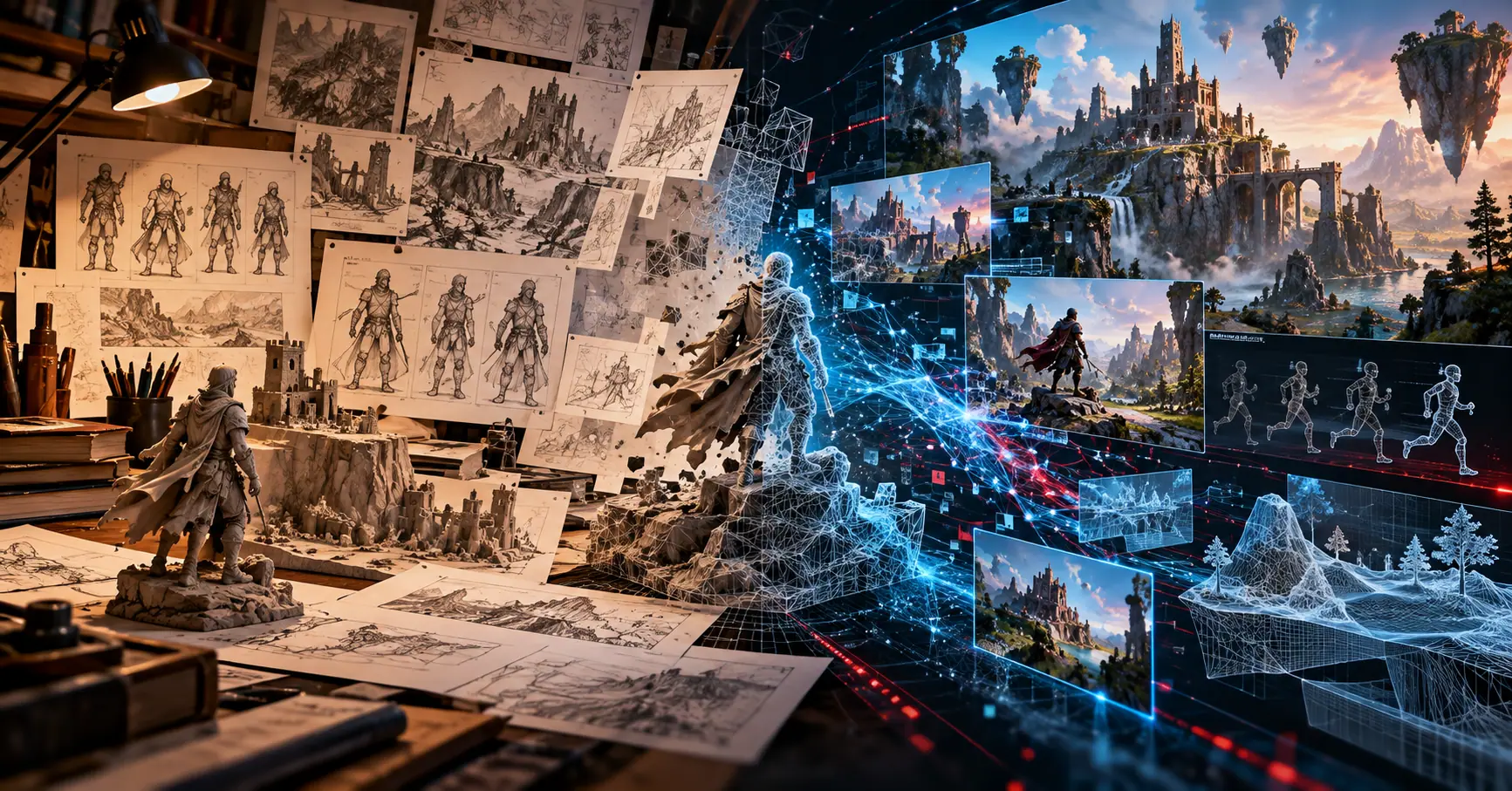
An editorial illustration representing the process of turning written game dialogue into synthetic speech.
From Written Dialogue to Spoken Performance
03

Why Natural-Sounding Dialogue Is Harder Than It Looks

A line can be perfectly understandable and still sound wrong. Believable game dialogue depends on timing, intention, context, and the small variations that make a performance feel human.

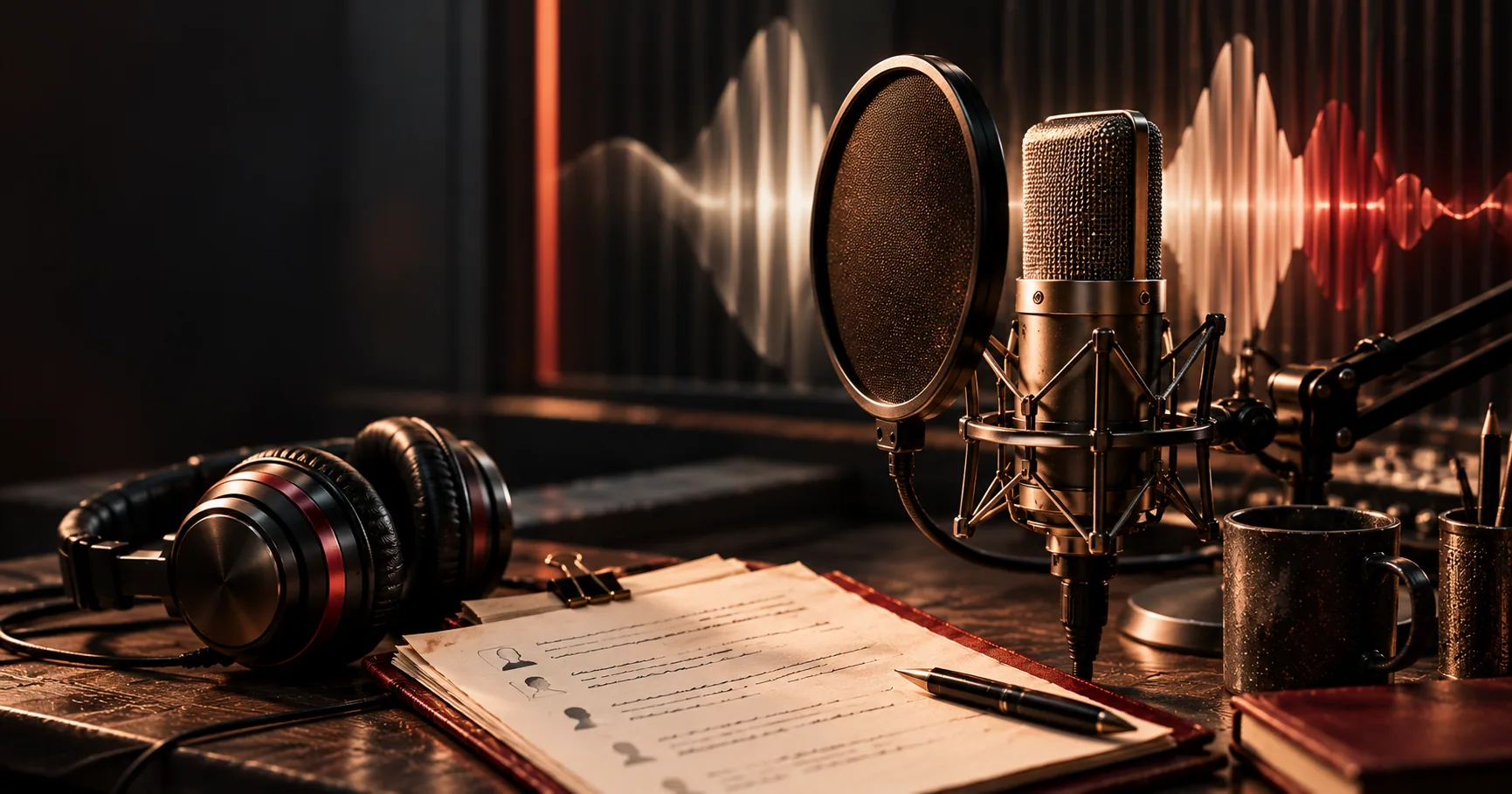
A recording script and studio microphone representing the expressive work involved in video game voice acting.
The Emotion Behind a Line

Imagine a companion warning you about an approaching enemy. The words may be correct, but if the voice sounds relaxed when the situation is urgent, the moment loses its impact. A dramatic confession can feel equally unconvincing if the delivery ignores the character's emotional state.

Human performers interpret a script. They can respond to direction, make deliberate choices about a line, and shape a performance around what happened immediately before it. Voice directors and audio teams help maintain that interpretation across multiple recording sessions.

AI speech systems can offer controls for tone, pace, and expression, but the available control depends on the model and its implementation. A generated line may mispronounce a name, place emphasis on the wrong word, or deliver a joke without the timing that makes it funny.

Games introduce additional complexity because dialogue does not always happen in a fixed sequence. A character might speak while walking, fighting, reacting to another character, or responding to an unexpected player action. The audio must fit the scene without interrupting the experience.

That is why expressive speech is only one part of convincing dialogue. Strong writing, character direction, sound design, animation, and reliable game logic remain essential.

“

A voice can pronounce every word correctly and still miss what the character is feeling.

04

Where Game Developers Are Experimenting With AI Voices

AI-driven character technology is moving beyond theory, but announced prototypes and development tools should not be confused with widespread use in released games.

NVIDIA's ACE technology brings together AI models and developer tools for conversational in-game characters, including technologies for speech, intelligence, and animation. Its developer materials describe both cloud-based and on-device options, giving studios different ways to integrate AI features. The tools are not evidence that every game using them replaces its voice cast. <Cite refs={["turn153027search1","turn153027search5"]}/>

Ubisoft has also publicly explored AI-driven characters. Its NEO NPC prototype, presented in 2024, investigated unscripted dialogue, contextual awareness, memory, and character reactions. Ubisoft described it as a research experiment and emphasised that creative teams still shaped the characters' personalities, backstories, and narrative roles. <Cite refs={["turn629892search2","turn629892search36"]}/>

In November 2025, Ubisoft introduced Teammates, a playable research experiment exploring voice commands and AI-supported character interactions. The project investigated how natural speech could influence gameplay and the way companions respond. It should be understood as an experiment rather than proof that open-ended AI dialogue has become standard across commercial games. <Cite refs={["turn629892search9"]}/>

These projects illustrate several possible directions: speech-driven interaction, more responsive companions, character assistants, and dialogue that can adapt to player input. They also demonstrate why developers need to think about narrative boundaries, performance, reliability, and the player's experience.

For Barlin Games readers, the key distinction is between a technology being demonstrated, a tool being made available to developers, and a feature actually shipping in a finished game. Those are different milestones and should be reported accurately.
Speech generation

AI models can convert text into spoken audio and provide developers with controls for voice and delivery.

Interactive characters

Research projects explore NPCs that respond to natural-language input rather than relying entirely on fixed dialogue options.

Game integration

Developers must connect AI responses to character behaviour, gameplay state, animation, and narrative rules.

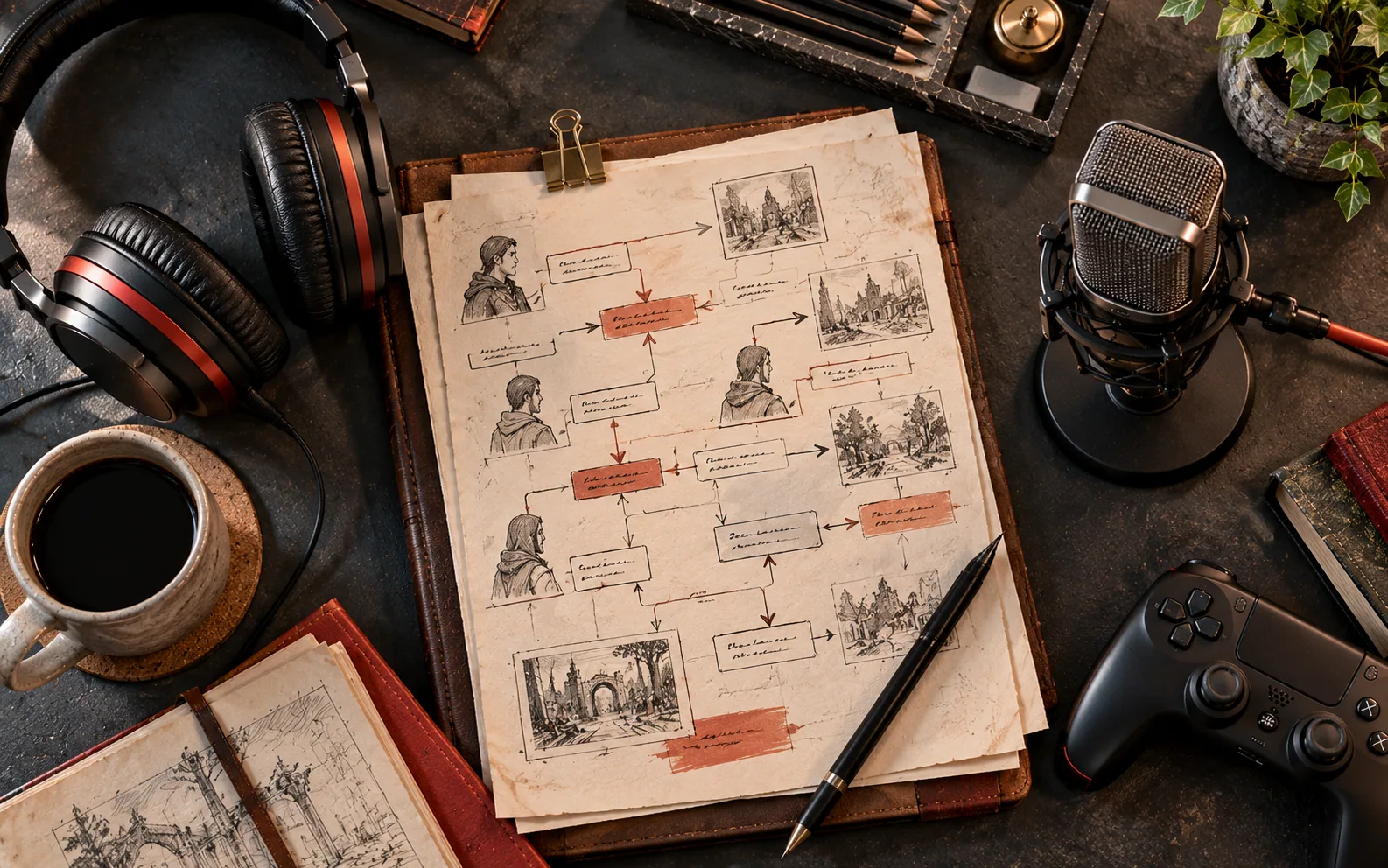
A microphone, headphones, controller, and dialogue planning notes representing AI voice technology development for games.
A Dialogue System in Development
05

When AI can reproduce characteristics of an identifiable person's voice, the discussion extends beyond technology. It raises questions about permission, compensation, ownership, and how a performance may be used.

A voice actor's contribution involves more than the sound of their voice. A performer brings interpretation, timing, emotional choices, and consistency to a role. An AI-generated replica may reproduce recognisable vocal characteristics, but that does not automatically reproduce the full creative process behind the original performance.

The central concern is whether a performer's voice can be used to generate new dialogue without informed agreement about how that replica will be created and used. A recording made for one project should not automatically be treated as permission for every future purpose.

In July 2025, SAG-AFTRA members ratified a new Interactive Media Agreement covering participating video game productions. The agreement includes AI protections, including consent and disclosure requirements for covered digital-replica uses. Its terms address matters such as intended use, and the agreement's rules are specific to the covered work and circumstances. <Cite refs={["turn153027search0","turn153027search3"]}/>

The union's February 2026 guidance further explains consent requirements for digital replicas under the agreement, including replicas created using covered performances and independently created replicas. These provisions should not be mistaken for a universal law applying identically to every performer, studio, country, or AI system. <Cite refs={["turn153027search37"]}/>

For developers, responsible practice means clarifying permissions before creating or deploying a replica, documenting the intended use, securing voice assets, and respecting applicable contracts and laws. For performers, clear agreements should address how the voice may be used, what work it replaces or supplements, how compensation works, and what happens when the project or intended use changes.

AI voice technology can create new production possibilities, but technical capability is not the same as permission. A convincing imitation does not, by itself, establish the right to use someone's voice.

A voice replica is not automatic permission

Being technically able to reproduce an identifiable voice does not establish the right to use it. Consent, contractual terms, intended use, and applicable law all matter.

06

Can AI Help Games Speak More Languages?

A game can reach players in more places when its dialogue is available in their language. AI may help development teams explore faster ways to create and manage localised speech, but translation alone cannot guarantee a convincing performance.

Localising a game involves more than translating words. Dialogue must preserve meaning, character personality, humour, cultural context, and timing. A short joke may depend on a phrase that has no direct equivalent in another language. A character's formality, accent, or manner of speaking may also carry important information.

AI tools can assist with parts of this workflow, including draft translation, speech generation, and the production of some language variations. Depending on the tool and the permissions involved, voice technology may also help teams explore a consistent vocal style across different languages.

However, generated speech can mispronounce names, mishandle cultural references, or deliver a line with the wrong emotional emphasis. A technically fluent translation can still sound unnatural to a native speaker. Human translators, voice directors, and language reviewers remain important for evaluating meaning and performance.

Studios also need to consider whether a performer's voice is authorised for use in additional languages or generated versions. Permission to use a recording in one context does not necessarily grant unrestricted permission to create new performances for every language or release.

The most useful approach is to treat AI as a potential production aid rather than an automatic replacement for localisation expertise. Human review can help ensure that dialogue remains understandable, culturally appropriate, and true to the character.

  • Meaning: Preserve the intent of the original dialogue.
  • Character: Maintain personality, relationships, and speaking style.
  • Pronunciation: Review character names, locations, and invented words.
  • Performance: Check timing, emotion, pauses, and emphasis.
  • Permissions: Confirm that voice recordings and replicas are authorised for the intended use.
  • Quality review: Have qualified language reviewers assess the final result.
07

Will AI Replace Video Game Voice Actors?

AI may change how studios produce some dialogue, but predicting that it will replace voice actors entirely overlooks the creative, technical, and human demands of performance.

AI-generated speech may be useful for certain temporary recordings, rapid prototypes, or carefully authorised production tasks. It may also help teams explore dialogue variations and test how a character could respond to different situations.

But acting is not simply the delivery of words. Performers make choices about intention, rhythm, emotion, subtext, and how a character changes throughout a story. Directors and writers build on those choices, while sound teams integrate them into a larger performance.

Even when a generated voice sounds convincing, a production still needs someone to decide what the character should say, whether the line fits the scene, and whether the performance serves the story. Poorly controlled generation can create inconsistent characterisation or introduce dialogue that contradicts established events.

The employment impact will depend on how individual studios use these tools, the contracts governing their work, and the creative and commercial decisions behind each project. It would be inaccurate to claim that AI has already replaced voice actors across the game industry.

The more useful question is which tasks may change, who controls the technology, and whether performers are treated fairly when their voices or performances are used. Clear consent, transparent terms, appropriate compensation, and meaningful human creative input will remain important parts of that discussion.

TaskPotential AI roleHuman contribution
Early dialogue prototypesGenerate temporary speech for testingWriters and directors decide what works
Final dramatic performances: May support selected authorised workflowsActors and directors shape interpretation and emotion
LocalisationAssist with drafts or some generated audioLanguage specialists review meaning, cultural fit, and performance
Voice replicationReproduce selected vocal characteristics when authorisedPerformers' consent, contracts, and applicable rights govern use
Interactive dialogueGenerate or speak some context-dependent responsesDevelopers and narrative teams maintain character consistency and story boundaries
08

The Future of AI Voice Acting in Video Games

The future of game voices will depend on more than how realistic synthetic speech becomes. It will also depend on how well the technology fits the game, the production process, and the people creating its performances.

AI could give developers new ways to prototype dialogue, support multilingual production, and experiment with characters that respond to player input. For smaller teams, carefully selected tools may help explore ideas that would otherwise require more recording time or technical resources.

Yet the strongest experiences will still need direction and restraint. A role-playing game may benefit from flexible optional conversations, while a tightly written cinematic scene may be better served by a carefully directed human performance. The same technology will not be the right choice for every character or every project.

Studios will also need to evaluate latency, consistency, accessibility, privacy, costs, and the reliability of the complete dialogue pipeline. Players need characters whose words make sense in context, not merely voices that sound realistic in isolation.

The industry's approach to consent and performer rights will be just as important as its technical progress. As contracts, tools, and laws continue to evolve, developers will need to be clear about how voice data is obtained and used.

AI does not have to make human performance irrelevant. Used responsibly, it may become another tool in the wider craft of game audio. What matters is whether it helps developers create stronger characters while respecting the performers and creative teams behind them.


The Voice Is Only the Beginning

AI can change how game dialogue is generated, voiced, and localised. But believable characters still need good writing, intentional performance, reliable technology, and responsible decisions about consent and creative control. The future of video game voices will be shaped not only by what AI can produce, but by how developers choose to use it.

09 — FAQ

Frequently Asked Questions About AI Voice Acting in Video Games

AI is changing how some video game dialogue can be written, spoken, and localised. These answers explain how AI voice technology works, how it differs from traditional voice acting, and why performer consent and creative control matter.

What is AI voice acting in video games?

AI voice acting is a broad term for using artificial intelligence in the creation or delivery of spoken game dialogue. It can include text-to-speech, synthetic voices, authorised voice replicas, and AI-assisted dialogue workflows. These uses differ from traditional performances recorded by human actors.

Can AI generate voices for video game characters?

Yes. Text-to-speech systems can turn written dialogue into audio, and some tools can create expressive synthetic voices or reproduce characteristics of an authorised reference voice. The results depend on the model, available controls, language, and how the audio is integrated into the game.

What is the difference between AI voice generation and voice cloning?

Voice generation can create speech using a synthetic voice that does not intentionally imitate a particular person. Voice cloning attempts to reproduce identifiable characteristics of a specific voice using reference material or other model inputs. Cloning raises additional questions about consent, permissions, and the intended use of the replica.

Are game studios already experimenting with AI characters and speech?

Yes. NVIDIA provides ACE technologies for conversational in-game characters, while Ubisoft has publicly demonstrated research projects such as NEO NPC and Teammates. These examples demonstrate experimentation and development tools; they do not mean that every feature is available in a released game or that all studios use AI voices in the same way.

Can AI voice acting replace human voice actors?

AI may change particular voice-production tasks, but it does not automatically replace the creative interpretation, direction, and emotional choices involved in acting. Its employment impact will depend on how studios adopt the technology, the work being performed, and the contracts and rights that apply.

Do voice actors need to consent to AI voice cloning?

Consent requirements depend on the applicable law, contract, and circumstances. SAG-AFTRA's 2025 Interactive Media Agreement includes consent and disclosure protections for covered digital-replica uses. That agreement does not establish identical rules for every performer or every country, so the specific terms must be checked.

Can AI help translate video game dialogue into other languages?

AI can assist with translation drafts and some synthetic speech workflows. Human language specialists are still important for checking cultural context, humour, pronunciation, character personality, and emotional delivery. Studios must also confirm that the intended use of a performer's voice is authorised.

Can AI NPCs respond to players in real time with spoken dialogue?

Some experimental and developer systems explore this kind of interaction. A real-time setup may combine player speech recognition, dialogue generation, speech synthesis, and game logic. Response speed, consistency, character boundaries, and performance costs all affect whether the result works well in a finished game.

Junaid
About the author

Junaid

Founder & Editor-in-Chief at Barlin Games

Founder and Editor-in-Chief of Barlin Games, covering games, studios, developers, gaming culture, and the stories behind the industry.
15 Articles Published
Love this article? Building a better way to discover games. View all articles