How AI Is Changing Voice Acting in Video Games
AI is changing how video game characters speak, from generated dialogue and synthetic voices to voice cloning and localisation. Discover how the technology works, what it could mean for game developers and voice actors, and why consent, creative control and human performance still matter.

On This Page Explore this article
A common approach is text-to-speech, often shortened to TTS. A system receives written words and produces audio that resembles spoken language. Modern systems can also model features such as pacing, emphasis, and emotional delivery, although the quality varies between tools and situations.
Voice cloning is a related but distinct technique. A model may use authorised voice recordings or other permitted examples to learn characteristics associated with a speaker. Depending on the technology, it can then generate new speech with a similar vocal identity. This is why consent and control over voice recordings matter.
Some game experiences add another layer: dialogue generation. A language model or another dialogue system produces a response, and a speech model converts that response into audio. Other systems may use pre-written lines, recorded performances, or a mixture of generated and authored material.
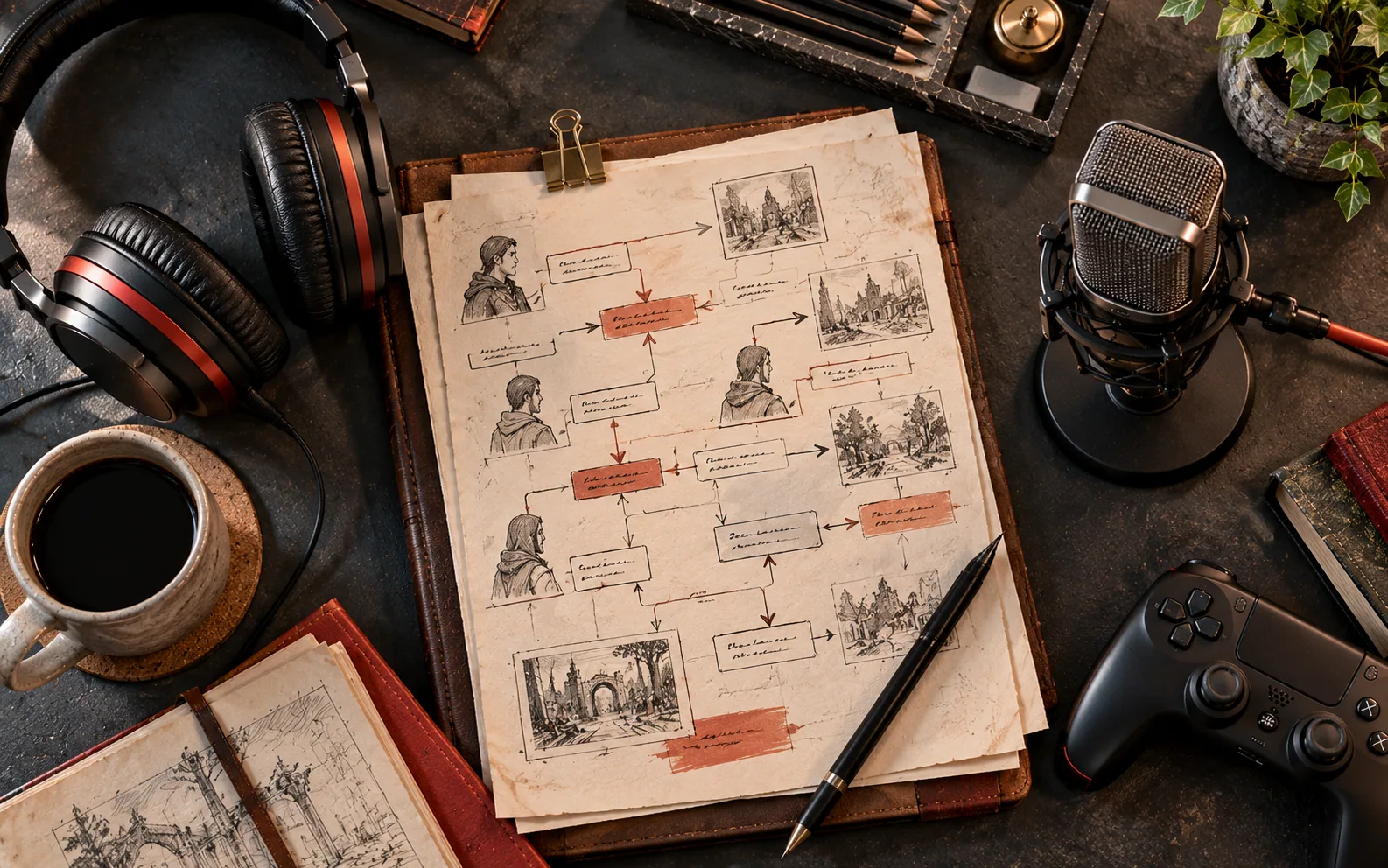
A simplified pipeline might look like this: the game determines what a character should communicate, the dialogue system produces or selects words, the speech model generates audio, and the game plays the result alongside animation and other sound effects.
Every stage introduces a potential problem. A response may not fit the character, generated speech may sound unnatural, audio may arrive too slowly, or animation may fail to match the words. Developers must test the complete experience rather than judging the voice model alone.


Imagine a companion warning you about an approaching enemy. The words may be correct, but if the voice sounds relaxed when the situation is urgent, the moment loses its impact. A dramatic confession can feel equally unconvincing if the delivery ignores the character's emotional state.
Human performers interpret a script. They can respond to direction, make deliberate choices about a line, and shape a performance around what happened immediately before it. Voice directors and audio teams help maintain that interpretation across multiple recording sessions.
AI speech systems can offer controls for tone, pace, and expression, but the available control depends on the model and its implementation. A generated line may mispronounce a name, place emphasis on the wrong word, or deliver a joke without the timing that makes it funny.
Games introduce additional complexity because dialogue does not always happen in a fixed sequence. A character might speak while walking, fighting, reacting to another character, or responding to an unexpected player action. The audio must fit the scene without interrupting the experience.
That is why expressive speech is only one part of convincing dialogue. Strong writing, character direction, sound design, animation, and reliable game logic remain essential.
NVIDIA's ACE technology brings together AI models and developer tools for conversational in-game characters, including technologies for speech, intelligence, and animation. Its developer materials describe both cloud-based and on-device options, giving studios different ways to integrate AI features. The tools are not evidence that every game using them replaces its voice cast. <Cite refs={["turn153027search1","turn153027search5"]}/>
Ubisoft has also publicly explored AI-driven characters. Its NEO NPC prototype, presented in 2024, investigated unscripted dialogue, contextual awareness, memory, and character reactions. Ubisoft described it as a research experiment and emphasised that creative teams still shaped the characters' personalities, backstories, and narrative roles. <Cite refs={["turn629892search2","turn629892search36"]}/>
In November 2025, Ubisoft introduced Teammates, a playable research experiment exploring voice commands and AI-supported character interactions. The project investigated how natural speech could influence gameplay and the way companions respond. It should be understood as an experiment rather than proof that open-ended AI dialogue has become standard across commercial games. <Cite refs={["turn629892search9"]}/>
These projects illustrate several possible directions: speech-driven interaction, more responsive companions, character assistants, and dialogue that can adapt to player input. They also demonstrate why developers need to think about narrative boundaries, performance, reliability, and the player's experience.
For Barlin Games readers, the key distinction is between a technology being demonstrated, a tool being made available to developers, and a feature actually shipping in a finished game. Those are different milestones and should be reported accurately.
Inside the story
One image from this article

Frequently Asked Questions About AI Voice Acting in Video Games
AI is changing how some video game dialogue can be written, spoken, and localised. These answers explain how AI voice technology works, how it differs from traditional voice acting, and why performer consent and creative control matter.
What is AI voice acting in video games?
AI voice acting is a broad term for using artificial intelligence in the creation or delivery of spoken game dialogue. It can include text-to-speech, synthetic voices, authorised voice replicas, and AI-assisted dialogue workflows. These uses differ from traditional performances recorded by human actors.
Can AI generate voices for video game characters?
Yes. Text-to-speech systems can turn written dialogue into audio, and some tools can create expressive synthetic voices or reproduce characteristics of an authorised reference voice. The results depend on the model, available controls, language, and how the audio is integrated into the game.
What is the difference between AI voice generation and voice cloning?
Voice generation can create speech using a synthetic voice that does not intentionally imitate a particular person. Voice cloning attempts to reproduce identifiable characteristics of a specific voice using reference material or other model inputs. Cloning raises additional questions about consent, permissions, and the intended use of the replica.
Are game studios already experimenting with AI characters and speech?
Yes. NVIDIA provides ACE technologies for conversational in-game characters, while Ubisoft has publicly demonstrated research projects such as NEO NPC and Teammates. These examples demonstrate experimentation and development tools; they do not mean that every feature is available in a released game or that all studios use AI voices in the same way.
Can AI voice acting replace human voice actors?
AI may change particular voice-production tasks, but it does not automatically replace the creative interpretation, direction, and emotional choices involved in acting. Its employment impact will depend on how studios adopt the technology, the work being performed, and the contracts and rights that apply.
Do voice actors need to consent to AI voice cloning?
Consent requirements depend on the applicable law, contract, and circumstances. SAG-AFTRA's 2025 Interactive Media Agreement includes consent and disclosure protections for covered digital-replica uses. That agreement does not establish identical rules for every performer or every country, so the specific terms must be checked.
Can AI help translate video game dialogue into other languages?
AI can assist with translation drafts and some synthetic speech workflows. Human language specialists are still important for checking cultural context, humour, pronunciation, character personality, and emotional delivery. Studios must also confirm that the intended use of a performer's voice is authorised.
Can AI NPCs respond to players in real time with spoken dialogue?
Some experimental and developer systems explore this kind of interaction. A real-time setup may combine player speech recognition, dialogue generation, speech synthesis, and game logic. Response speed, consistency, character boundaries, and performance costs all affect whether the result works well in a finished game.

Junaid
Founder & Editor-in-Chief at Barlin Games
Founder and Editor-in-Chief of Barlin Games, covering games, studios, developers, gaming culture, and the stories behind the industry.